
Proposal & RFP responses
Compliance matrices, executive summaries and technical narratives that answer the scoring criteria instead of circling them.
- Executive summary
- Technical approach
- Compliance matrix
- Resumes & org charts
Spec 01 / Commercial construction copy
Capability statements, proposal narratives, case studies and website copy for general contractors, specialty subcontractors and A/E firms. Written by someone who knows what an owner's rep actually reads.
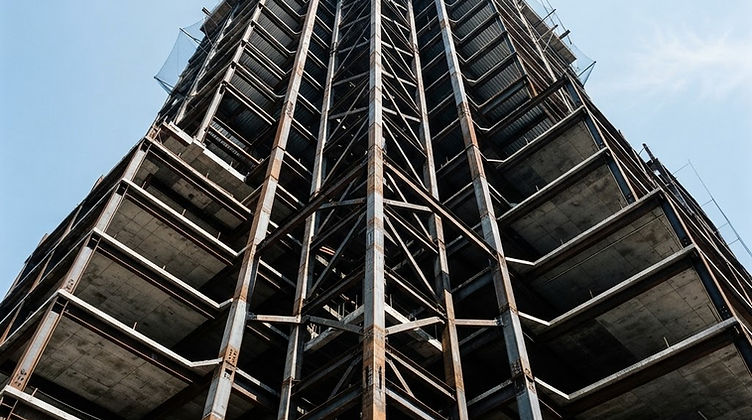
Sectors
Data centers · Multifamily · Industrial · Civil
Formats
RFPs · SOQs · Case studies · Website · Pursuit email
Turnaround
10–15 business days per project
Six formats that decide whether a firm gets the interview, the award, or the courtesy rejection.
Compliance matrices, executive summaries and technical narratives that answer the scoring criteria instead of circling them.
One page to twelve, built so an owner's rep understands your depth in ninety seconds.
Finished jobs turned into proof: the constraint, the scope, the number, and the client's own words.
Sector and service pages written for the people who sign the contract, not for the people who approve the logo.
The follow-up sequences that keep you in the room between bid day and award.
One tone across bids, web and recruiting, so your field crews and your proposals sound like the same company.
Three engagements, three different bottlenecks. Every one started with a firm that could build anything and explain none of it.
 Education · Civic · Commercial
Regional general contractor — ENR Top 400
A $1.1B contractor was losing work before the interview. We rebuilt how the portfolio told its own story.
12% → 41%
SOQ shortlist rate over two quarters
Read the case study Mission critical · Data centers
Specialty electrical contractor
Twelve mission-critical builds and nothing online to show for it. We built one page that does the selling.
38
Site tour requests in 90 days
Read the case studyIndustrial · Aviation · Higher educationStructural steel fabricator
A sixty-page brochure became three case studies. Owners started calling instead of replying.
$186M
Pursuits won with the new suite
Read the case studySample engagements shown — replace with your own case studies before publishing.
The work is research-heavy and calendar-light. You will know what is happening every week.
A recorded interview with the people who ran the job, plus whatever documents already exist — schedules, RFIs, closeout packages, award submissions. No blank-page brainstorms.
You approve an outline and the argument behind it before a single paragraph is written. Cheap to change here, expensive to change later.
Full draft in your house style, written to the scoring criteria where there are any. Technical claims flagged for your engineers, never invented.
Two rounds of revisions, then editable files and a one-page note on what to update next year so the copy doesn't rot.
Nine years ago I was the person in the trailer at 11 p.m. rewriting a proposal narrative while the estimator read numbers over my shoulder. Since then I have written for contractors, fabricators, and A/E firms across data centers, multifamily, industrial and civic work.
That background is the product. I know what a schedule delay costs, why a change order narrative matters to an owner's rep, and how little a buyer cares about your values statement when your case studies cannot name a number.
I do not write "quality, safety and schedule" copy. I write the specific thing you did that another firm could not have done.

“She sat in a preconstruction meeting for two hours, then came back with the argument we had been failing to make for six years.”
“The case studies read like our best project managers talk. That is much harder than it sounds.”
“We sent one capability statement to an owner's rep who had ignored us twice. We are on their bid list now.”
Sample references shown — replace with your own client quotes.
Every engagement starts with a free 30-minute call. From there I quote the work in full — deliverables, timeline and fee, with a payment schedule built around the contract term. A single $1,500 deposit secures it.
Contract deposit
$1,500
To secure the contract after the call
How it works
Free. We look at the pursuit, the deadline and what already exists. You leave knowing whether I'm the right writer for it.
Scoped to the work: deliverables, timeline, total fee, and a proposed schedule of installments across the contract term.
Paid once you accept the quote. It holds your slot and is credited against the total — the work does not start until it clears.
The remainder is invoiced in installments for the duration of the contract — monthly, by phase, or on a schedule that matches your cash flow.
No retainers you can't cancel and no twelve-month commitment buried in a PDF. The quote states the total, the installments and what triggers each one before anything starts.
Tick what you need and how fast. It gives you a range, not a quote — the exact fee comes after the intro call, once I know the deadline and what already exists.
What do you need written?
How soon do you need it?
Estimated investment
Pick the work you need and an honest range appears here.
No login, no form. Change your answers and the number moves with them.
A $1,500 deposit secures the contract and is credited against this total. Anything outside this scope is quoted separately, in writing, before it starts.



